
Mountain Massif: Bioč, Maglić, Volujak and Vlasulja
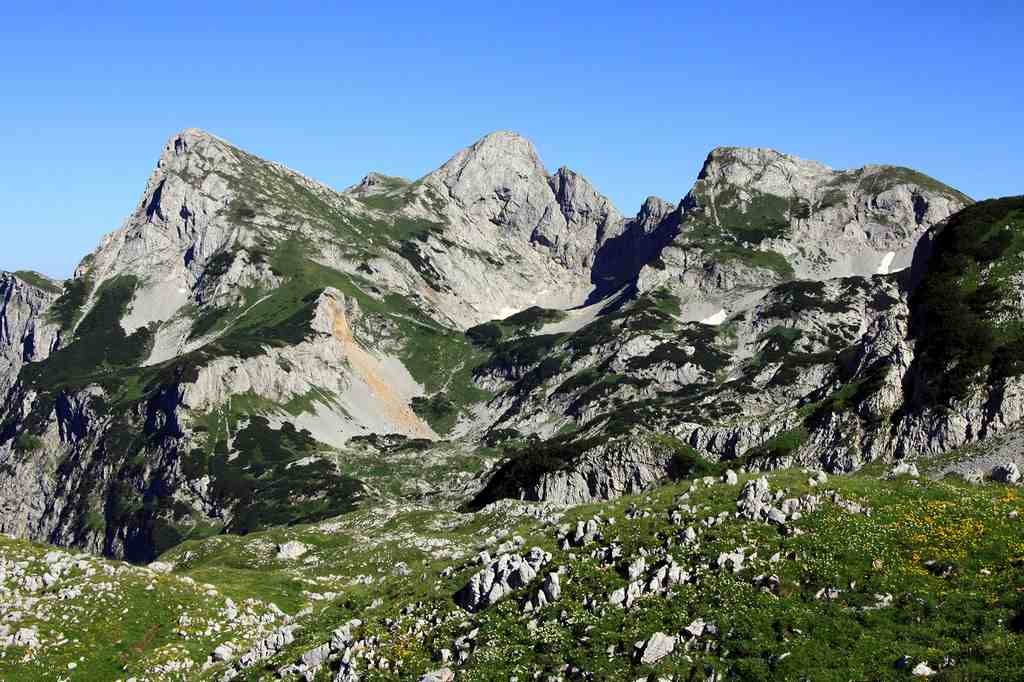
In the northwestern part of Montenegro, there are four mountains that share no official collective name, yet they form a unified geomorphological and geological whole, centered around the stunning Trnovačko Lake. These peaks are Bioč, Maglić, Volujak, and Vlasulja. In the northwestern part of Montenegro, there are four mountains that share no official collective name, yet they form a unified geomorphological and geological whole, centered around the stunning Trnovačko Lake. These peaks are Bioč, Maglić, Volujak, and Vlasulja.
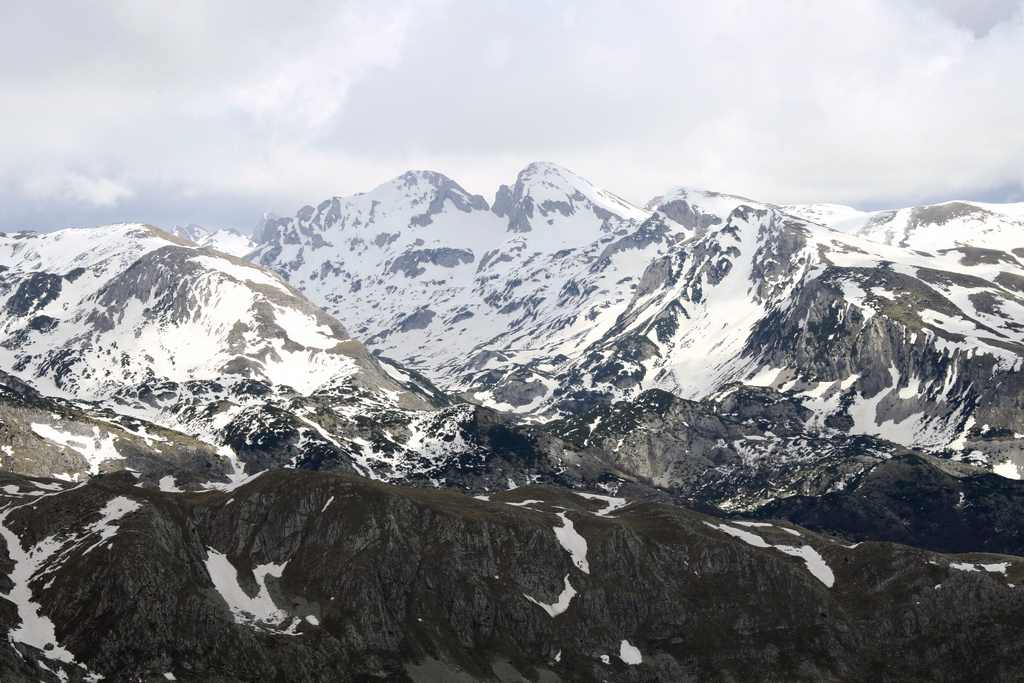
The entire area of these mountains is bordered by the Piva Canyon to the east, the Sutjeska Valley to the north and west, and the Vrbnica Valley to the south. Adding the Suha Valley to this network reveals a true treasure trove of landscapes for visitors: from sparkling river shallows and terraced, verdant valley slopes, to narrow gorges and rocky edges of high plateaus, all the way up to the highest peaks sculpted by glacial erosion.
Prutaš
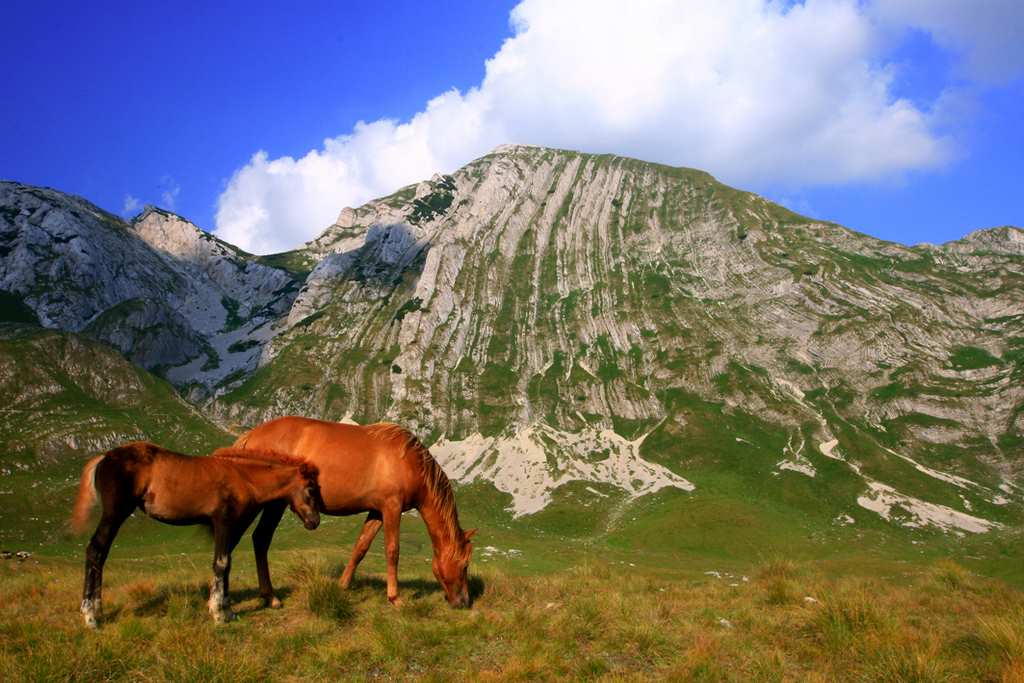
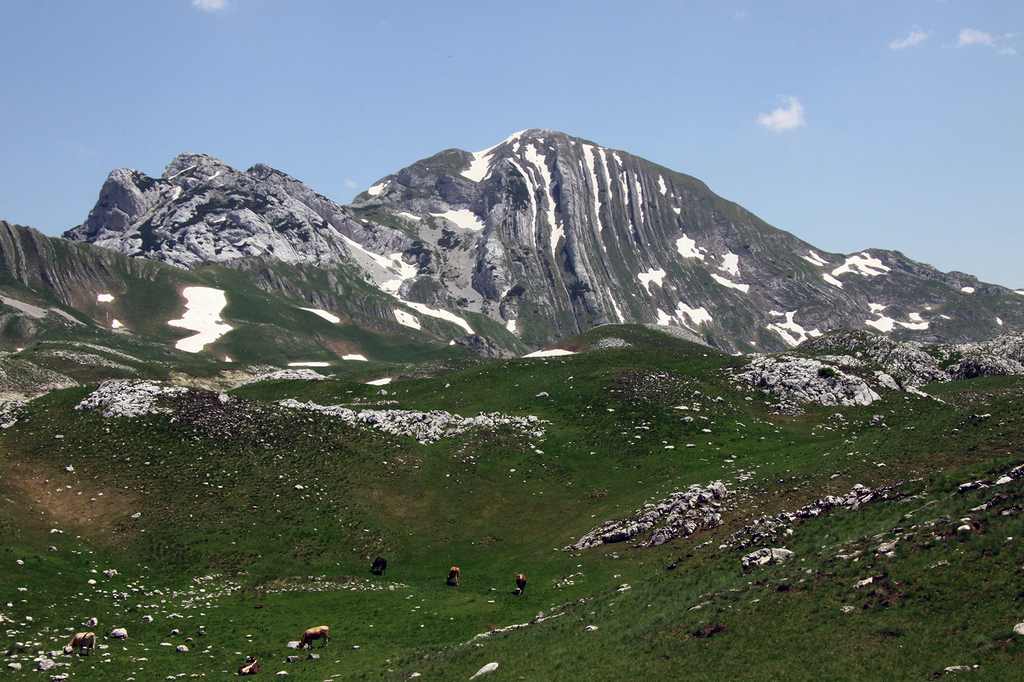
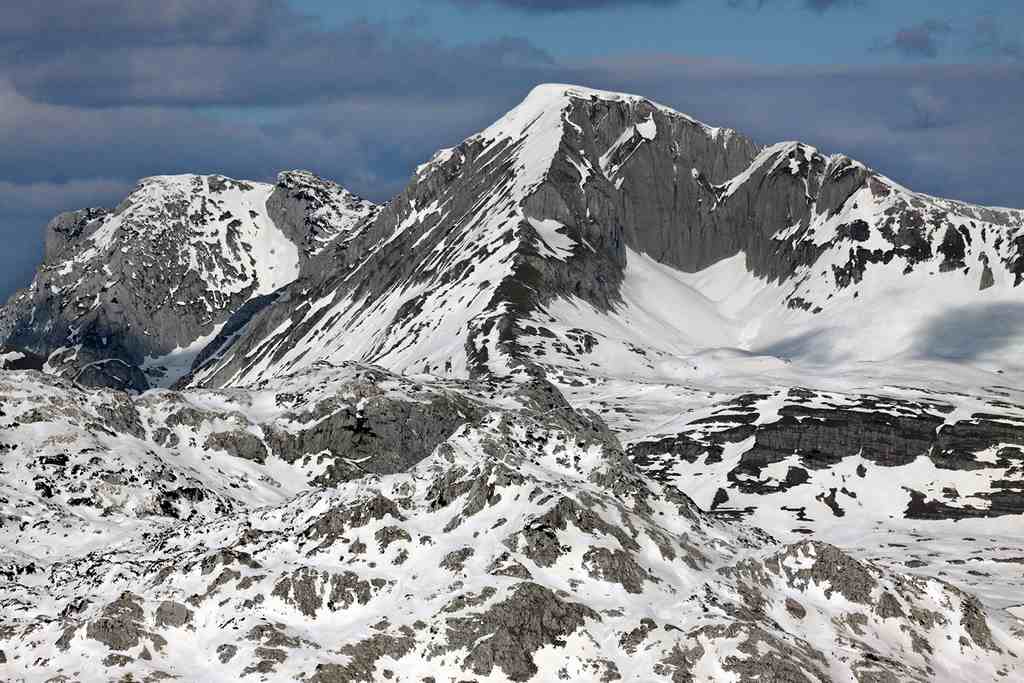
Prutaš is an exceptional peak, not only compared to neighboring summits in the Durmitor region, but across Montenegro as a whole. It is characterized by gently rolling ridges, verdant mountain slopes, and the remarkable slanted layers known as “prutovi,” from which the peak takes its name. The mountain also features vertical cliff faces and typical rugged rock formations. Its northern spur, Gruda (2,302 m), attracted the first alpinists to Durmitor.
The cascading northern face of Prutaš descends all the way to the bottom of the upper Sušica Canyon. Beyond these features, Prutaš serves as one of the finest viewpoints for observing the magnificent arcuate barrier of the glacial cirque. If any peak in our mountains can be considered a symbol of an enjoyable ascent and the magic of a high-altitude alpine environment, it is undoubtedly Prutaš.
Volujak
Volujak is a mountain located southeast of Plužine, straddling the border area between Bosnia and Herzegovina and Montenegro. Its highest peak reaches 2,336 meters.
The mountain bears numerous traces of glaciation. At an elevation of 1,660 meters lies Volujačko Lake, a glacial lake. On the northern side, behind a deep limestone valley, rises a nameless, juniper-covered peak at 1,940 meters.
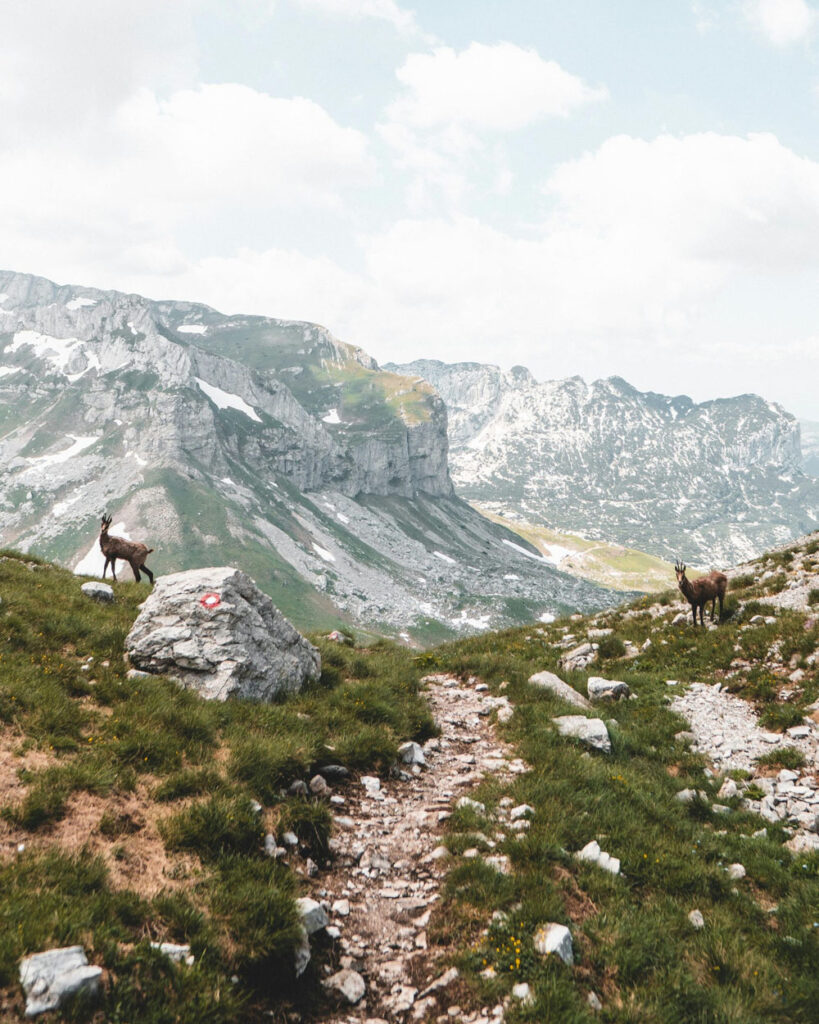
To the east, above the Crnogorska Vale, stretch the rocky and grassy ridges of Gradsko Brdo (1,963 m) and Mramorje (1,920 m). Behind them, on the northern slopes, lie the formidable Gradne valleys — the least explored part of the mountain. The steep slopes descending into the Sutjeska Valley provide a safe habitat for wildlife.
Volujak is also rich in medicinal herbs, berries, and edible mushrooms, making it not only a scenic but also an ecologically valuable mountain.
Bobotov kuk
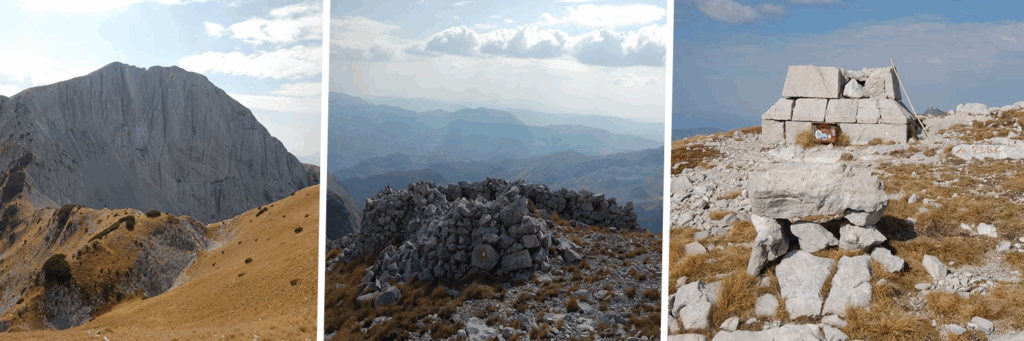
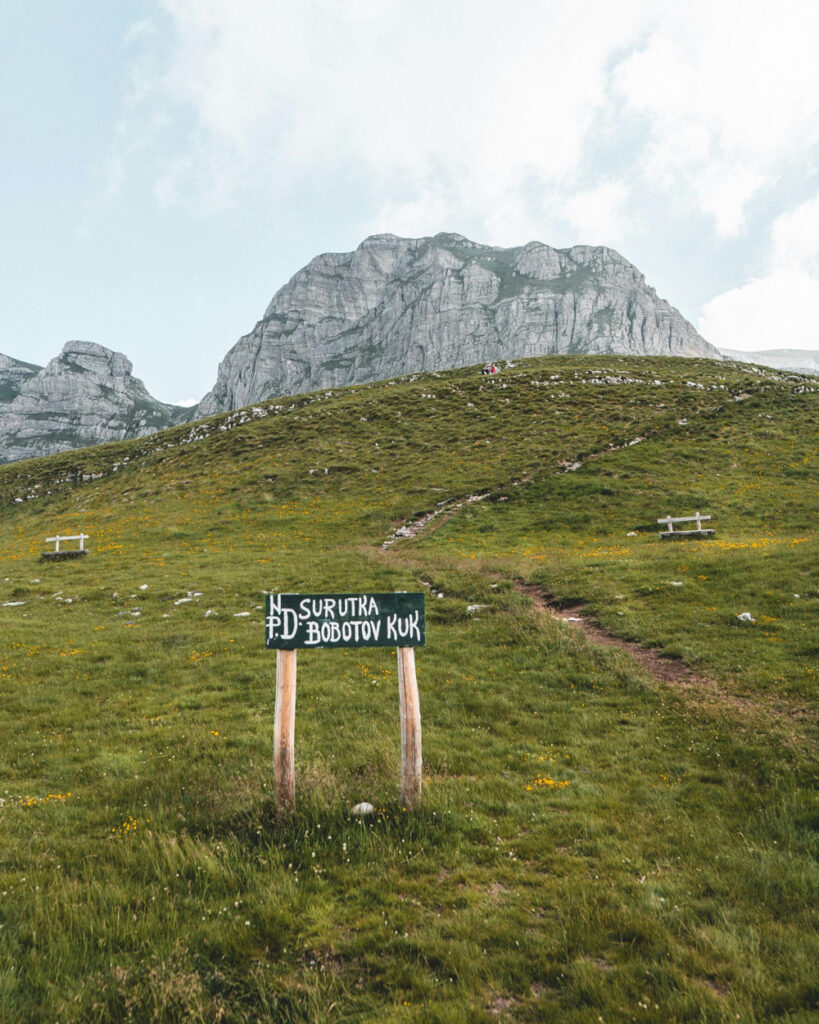
Bobotov Kuk is the highest peak of Durmitor. Climbing this summit is not only a trophy of mountaineering achievement for visitors, but also an impressive experience and insight into the diversity of mountain landscapes shaped by intense glacial and pre-glacial erosion. Bobotov Kuk presents an awe-inspiring appearance from every angle, making it a striking landmark no matter where it is viewed from.
As the highest peak of Durmitor—and officially of all Montenegro—Bobotov Kuk increasingly attracts hikers and nature enthusiasts every year. Visitors are drawn by the chance to conquer its summit and experience what it feels like to stand on the throne of Durmitor and Montenegro, surrounded by pristine and awe-inspiring natural beauty.
Durmitor
„Among the mountain giants of the South Slavic lands, the most powerful and magnificent is Durmitor.“ – Kurt Hassert, German geographer
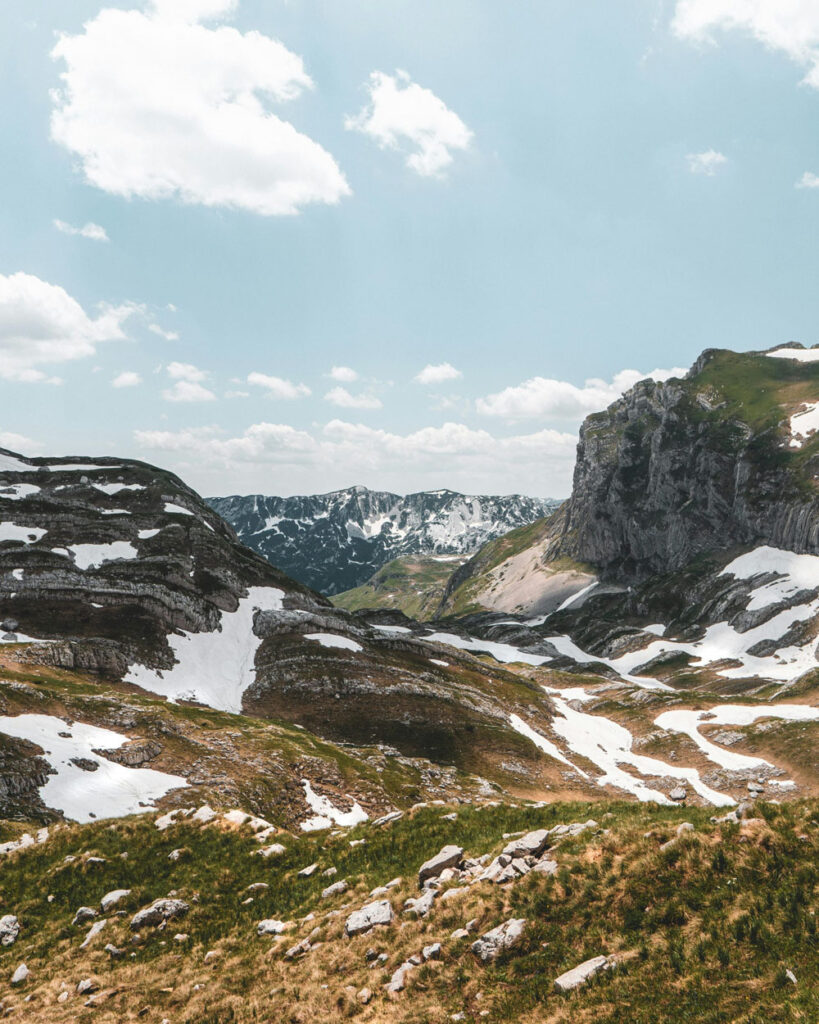
Durmitor is the most beautiful mountain in Montenegro and one of the most morphologically interesting mountain systems in the region. Its landscapes, celebrated for their beauty and untouched authenticity, were declared a national park in 1952.
Covering the largest area of any national park in Montenegro, Durmitor has been listed as a UNESCO World Natural and Cultural Heritage site since 1980.
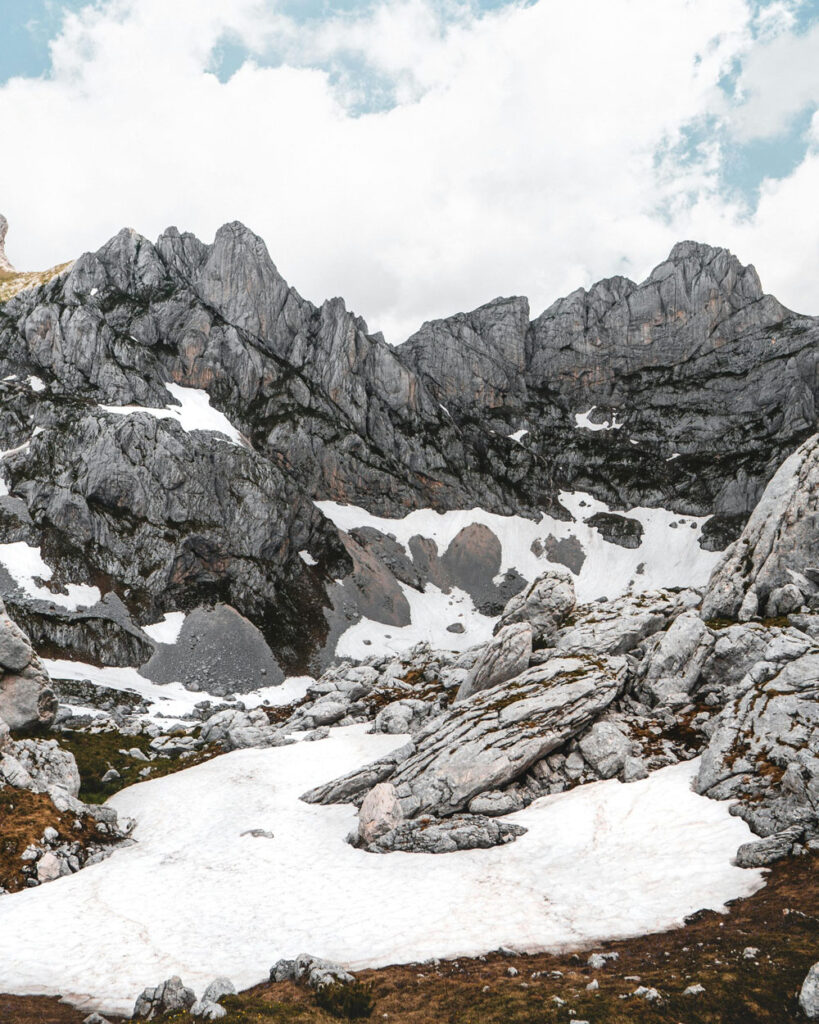
On this relatively compact territory, powerful tectonic forces and erosion — both riverine and glacial — have shaped a mountain world of fantastic forms.
Sharp peaks rise like Alpine needles (Minin Bogaz, Zupci, Sohe), while others present massive domes or shoulders. Some are dissected into „prutovi“ layers (Prutaš, Šareni Pasovi), others are vertically incised (Savin Kuk, Šljeme), some dressed in unique textures (Međed), or brightly colored (Crvena Greda). Additional peaks display saddle shapes (Sedlena Greda), twisted forms (Uvita Greda), rounded summits (Obla Glava), or stand solitary (Stožina). Collectively, these peaks — small and towering, intimidating or luminous — can be circled on foot in a single day along their bases.
Accompanying the peaks are their faithful companions: glacial cirques and valleys (Valoviti, Kalica, Ališnica, Škrke), often snow-covered even in summer, sparkling, scenic, and passable. In lower regions (Dobri do), these valleys provide unparalleled mountain pastures.
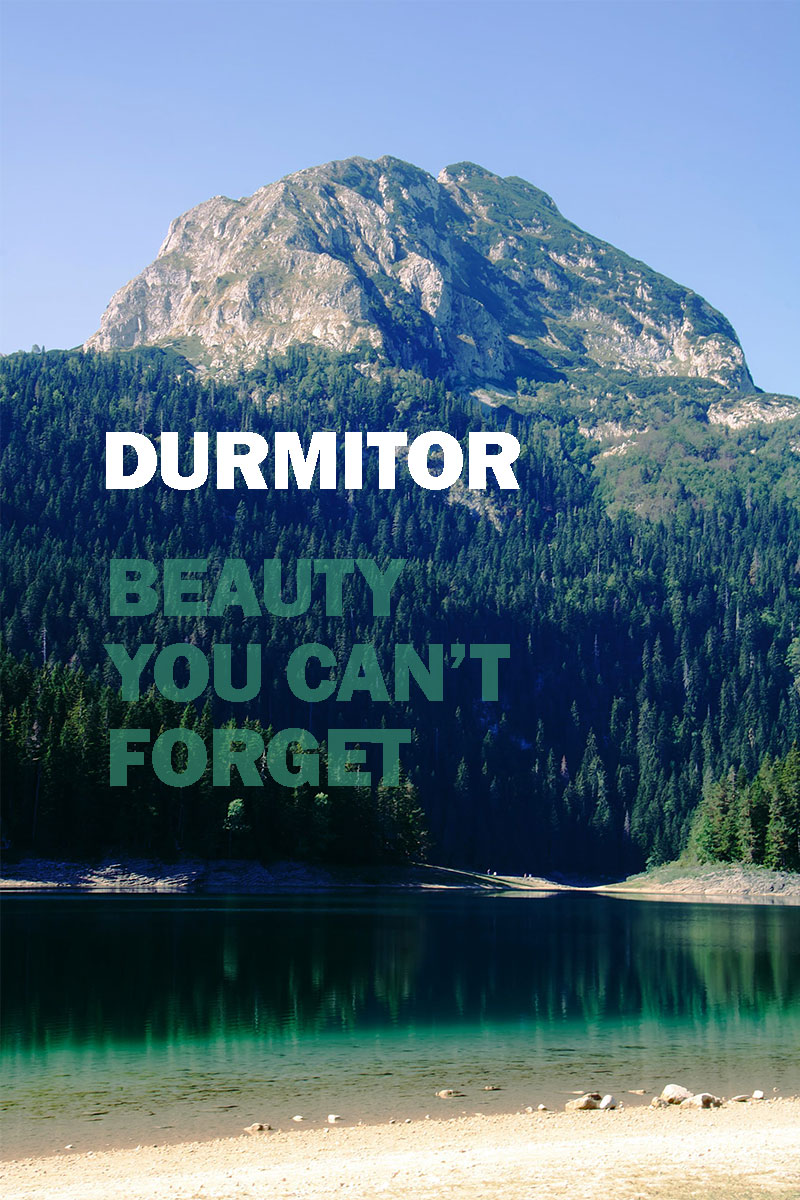
The landscape is enriched by numerous lakes, all of glacial origin and highly distinctive. These include: Crno Jezero, nestled in a wide, deep basin surrounded by primeval conifer forest; Škrčka Jezera, set at the bottom of a cirque with cliffs over 400 meters high; Zeleni Vir and Modro Jezero, icebound until mid-summer; and Vražje Jezero and Riblje Jezero, hidden within endless meadows.
The grandeur of Durmitor is further enhanced by canyon valleys bordering wider areas (Tara and Piva Rivers), as well as deep valleys and gorges at the heart of the massif (Valov and Sušica Canyon). Some canyon walls, carved into limestone and rising to heights of up to 1,500 meters (Veliki Štuoc region), are unrivaled in Europe, with few parallels worldwide.
The colorful villages at the mountain’s foothills, alongside the selfless, noble, and courageous highlanders — unbroken fighters for freedom — complete the unique character of this remarkable region.
Highest Peaks of Durmitor: Bobotov Kuk, Prutaš, Šareni Pasovi, Sedlena Greda, Uvita Greda, Minin Bogaz, Bandijerna, Šljeme, Savin Kuk, Međed, Rbatina, Obla Glava, Planinica, Suva Rtina, Crvena Greda, Pašina Gomila, and Štuoc.
Western Durmitor Peaks: Prutaš, Šareni Pasovi, Sedlena Greda, Uvita Greda, Vjetrena Brda, Ranisava, Bolj, and Lojanik belong to a completely different geological formation.