Piva Canyones
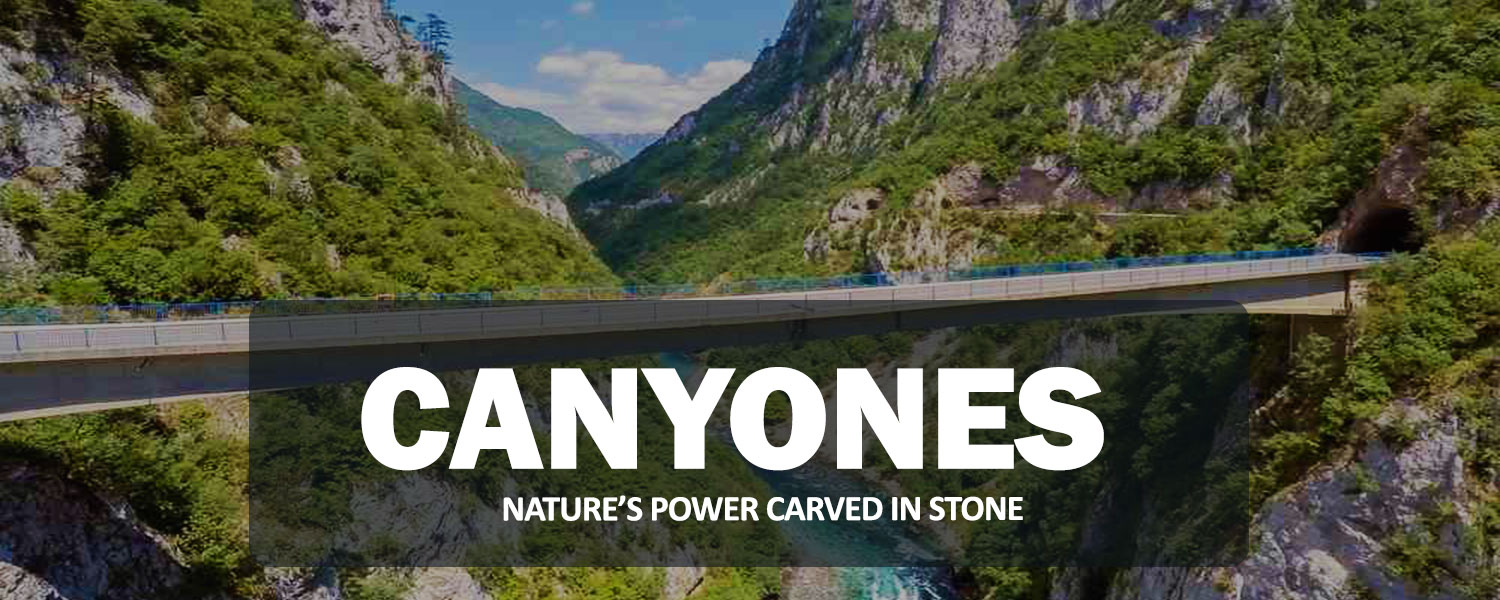
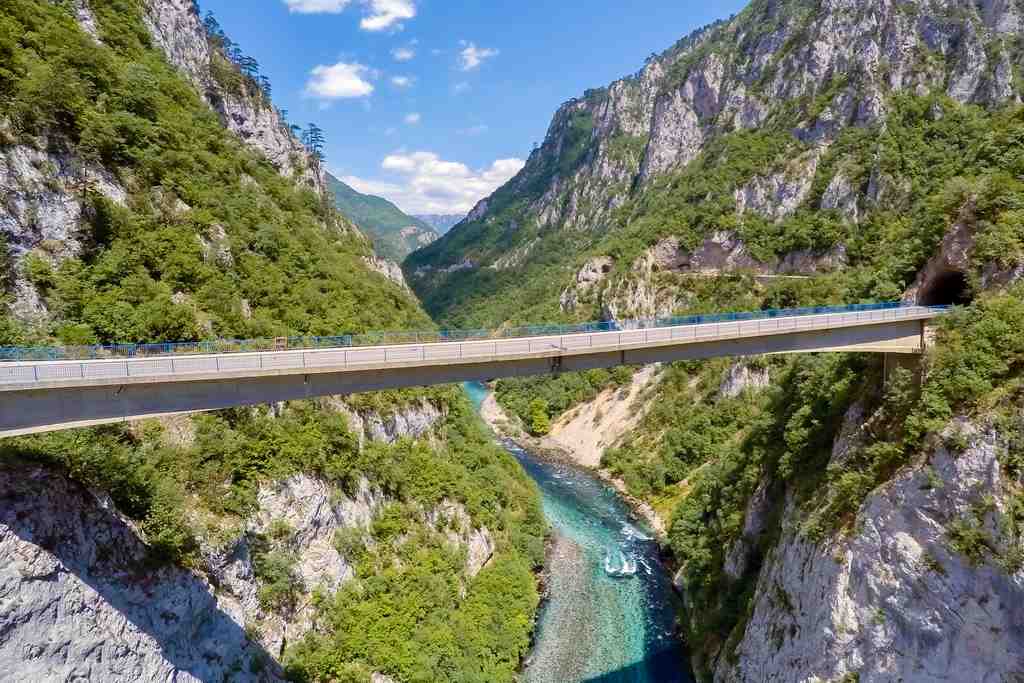
The Piva River is located in the northwestern part of Montenegro, at the foot of the high mountain area known as the Piva Mountain, within the Durmitor mountain range. The valley of the Piva River is known as Piva Župa. Surrounded by towering mountains (Volujak, Maglić, Bioč, and Piva Mountain), the Piva has carved an exceptionally beautiful canyon, 33 km long and up to 1,200 meters deep.
It was considered one of the most picturesque and attractive canyons in the region. The Piva Canyon is unique because this natural wonder was significantly altered by human intervention. However, this does not diminish the essence and beauty of the river and canyon. With the construction of the hydroelectric power plant (in 1976) and the Mratinje Dam, the artificial Piva Lake was created.
The Mratinje Dam, standing 220 meters high, is among the largest dams of its kind in Europe. The view of the dam is breathtaking — it appears almost surreal and truly impressive. With the flooding of part of the canyon, Piva Lake was formed, submerging an entire small town, Plužine.
The town of Plužine was completely relocated and rebuilt at a higher elevation, where it stands today on the shores of Piva Lake. It is considered the youngest town on the Balkan Peninsula. Something similar happened with the Piva Monastery, which was literally moved stone by stone to a higher location.
After the dam, the Piva Canyon continues north, where the Piva meets the Tara River near Šćepan Polje on the border with Bosnia and Herzegovina, forming the Drina River.
Komarnica Canyone
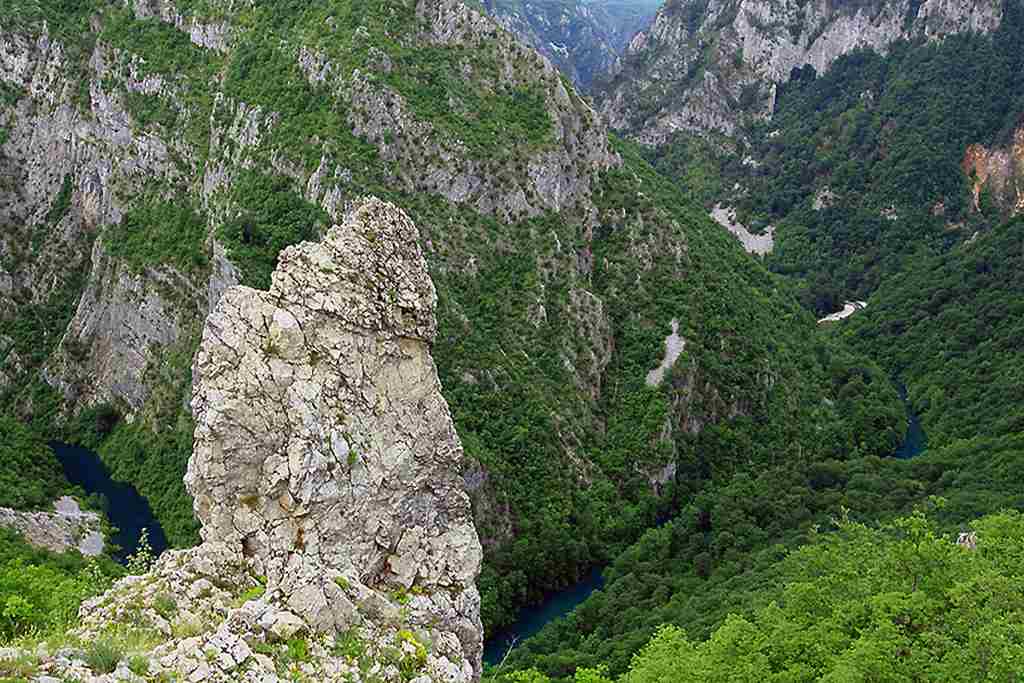
Komarnica originates in the Komanska Poljana plateau and flows through a very narrow gorge between the Drobnjak villages of Pošćenje and Duži, after which it merges with the Bukovica River. The Komarnica then continues to flow between the mountains Vojnik and Treskavac, through an almost uninhabited area, and enters the Piva region, where it turns north, joins the Piva spring, and descends into the deep Piva Canyon.
Up to a certain widening below the village of Donja Rudinica, the Komarnica Canyon through Piva is extremely deep, steep, and narrow — especially between Dragaljevo and Duba, and between Bezuje and Bukovac — so much so that the villagers from these settlements can shout and talk to each other from hill to hill, with powerful echoes bouncing off the sheer rock walls of the canyon, which reaches a depth of about 700 meters.
At the end of the river valley, outside the borders of the Piva region, the Komarnica enters rocky terrain and gradually becomes “untouchable.” This is where the Nevidio Canyon begins. It rightfully bears this name, as the Komarnica suddenly disappears into a strangely carved opening, becoming invisible to the human eye.
The area around the canyon entrance is one of the most beautiful parts of the Durmitor region. The charm of this area is highlighted by the village of Pošćenje, with its two glacial lakes. Nevidio Canyon is approximately 2 km long. The entrance is located at 935 meters above sea level, while the exit lies at 810 meters.
Tara Canyone
The Tara Canyon is 80 km long and ranks among the deepest canyons in the world (1,300 m), second only to the Grand Canyon in Colorado, and it is the deepest canyon in Europe. Steep, narrow, and edged with sharp cliffs hundreds of meters high, the canyon is rich in caves of various sizes and shapes — mysterious, deep and shallow, dark and bright. With its vivid and unique landscape, powerful river flow, waterfalls, and numerous springs (around 15 larger ones), as well as many rapids, the Tara Canyon is unparalleled — a true natural wonder without equal in the world.
This is one of the rare oases of untouched nature and a reserve for many endemic plant and animal species, which is why in 1977 it was included in UNESCO’s “Man and Biosphere” program as an exceptional geomorphological and ecological entity. One of its main tourist attractions is rafting on the Tara River.
Whoever visits the Tara Canyon and stands on its shores remains forever attached to it.
Due to its uniqueness and remarkable beauty, almost every part of the canyon has its own special name. Some names come from the natural features of that part of the canyon, others from legends that have been preserved here since ancient times, and some commemorate events and people who left a strong mark in this area — all speaking to the eternal and unbreakable bond between humans and this river, which has always challenged, attracted, and enchanted them.
The Tara River is fed by snow from the surrounding mountains and by numerous springs that are abundant throughout the canyon. Perhaps the most famous among them are the Bajlovića Sige — a whole network of waterfalls where water from the Bučevica Cave flows into the Tara across a width of 150 meters, with drops reaching up to 30 meters in some places. Here, one can enjoy the dance of water and its path through the limestone sculptures that have been shaped by the river over centuries. Not even the eternal city of Rome, with all its famous fountains, can surpass the magic you can experience here.